Redentora

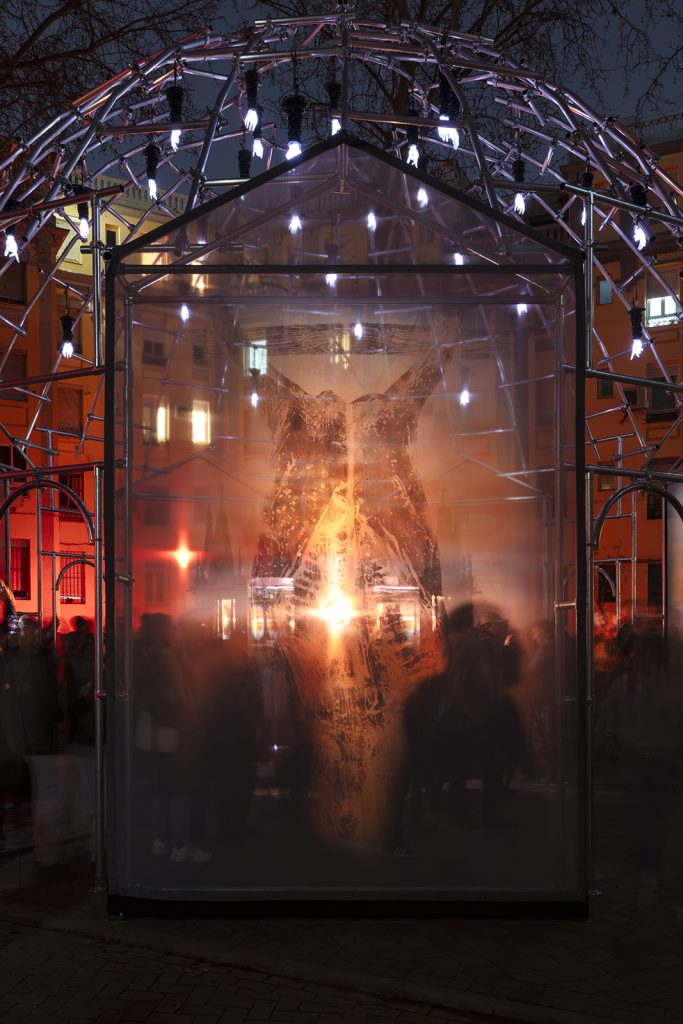
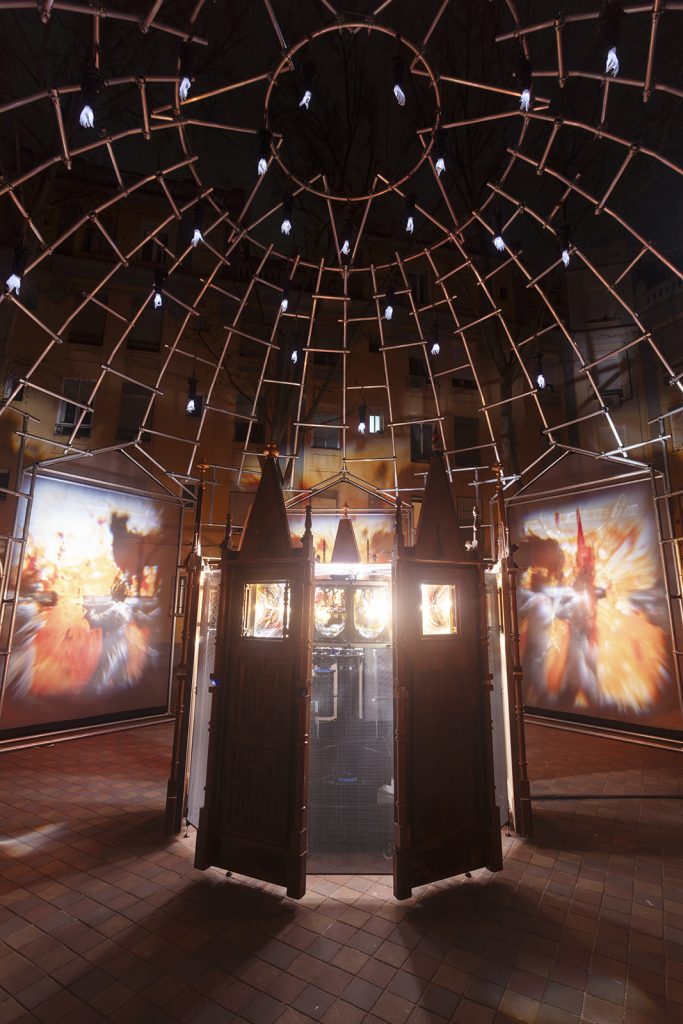
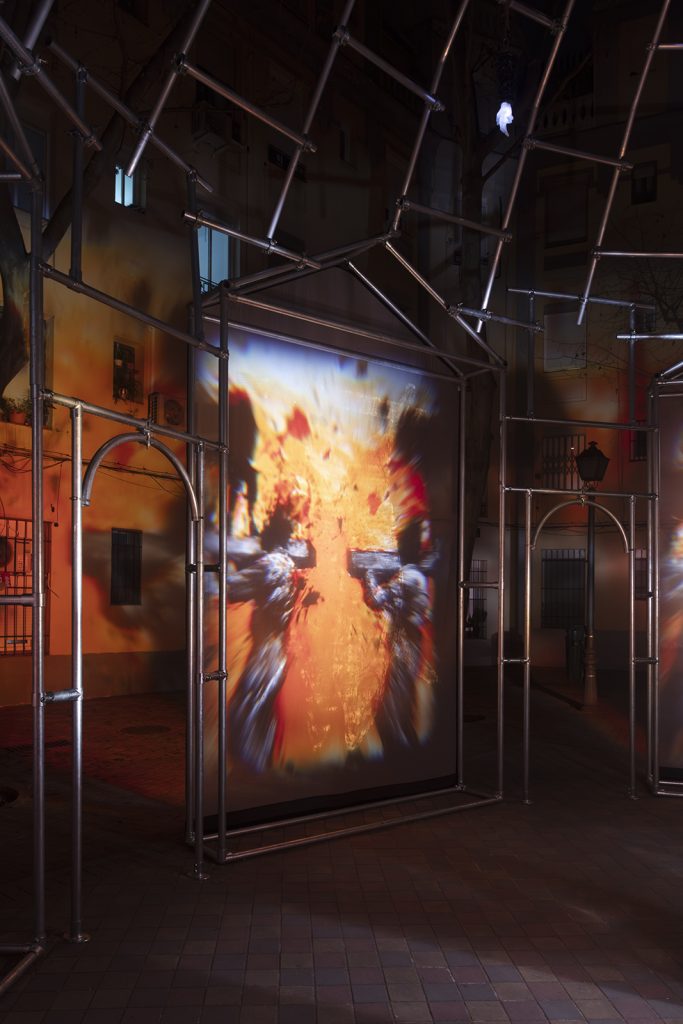
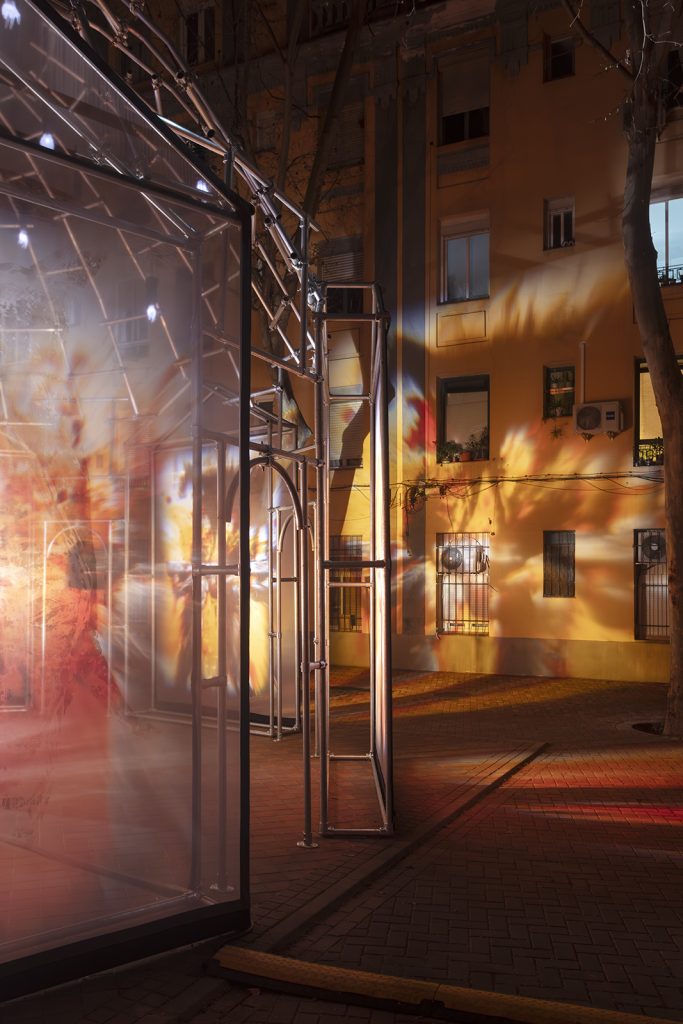
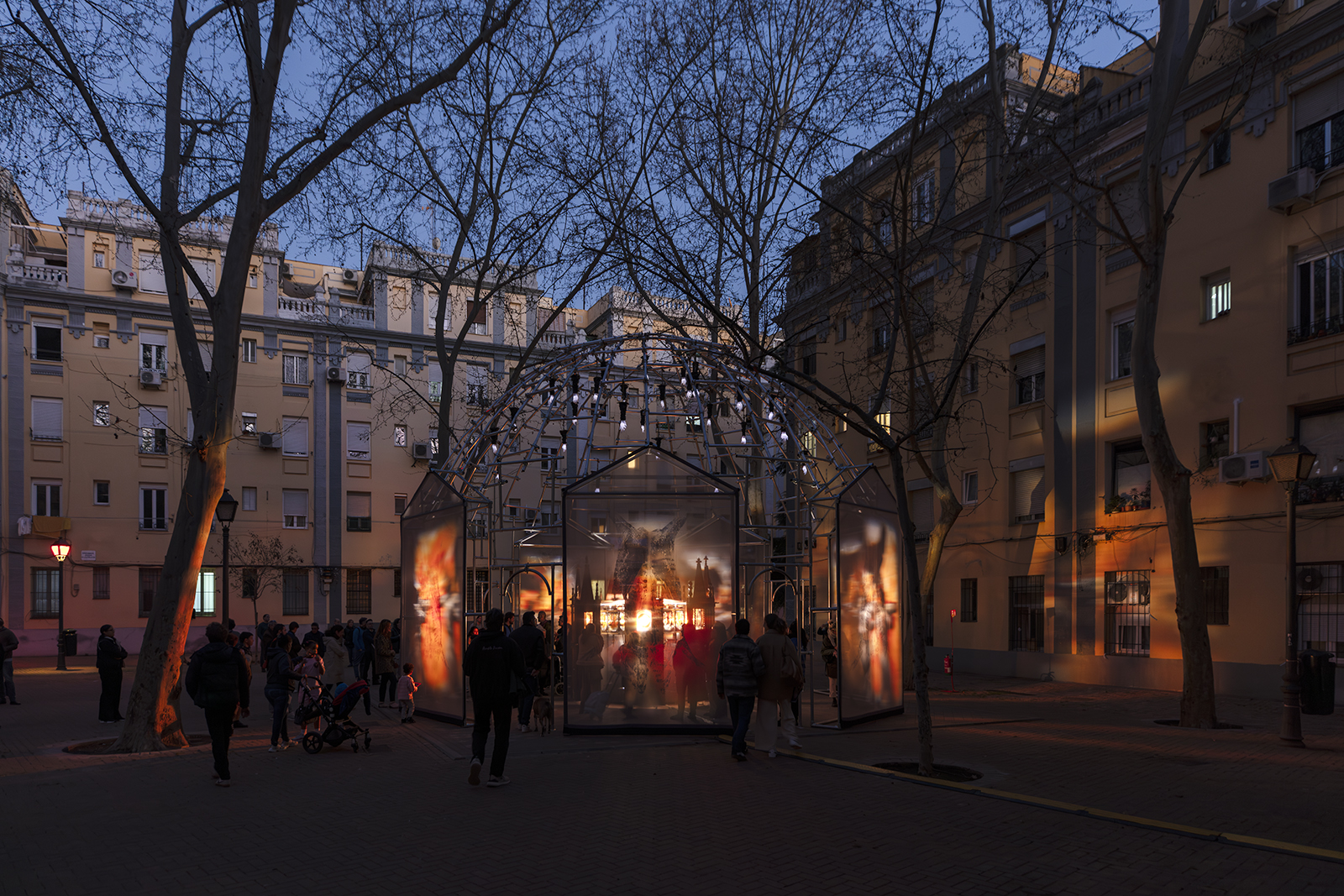
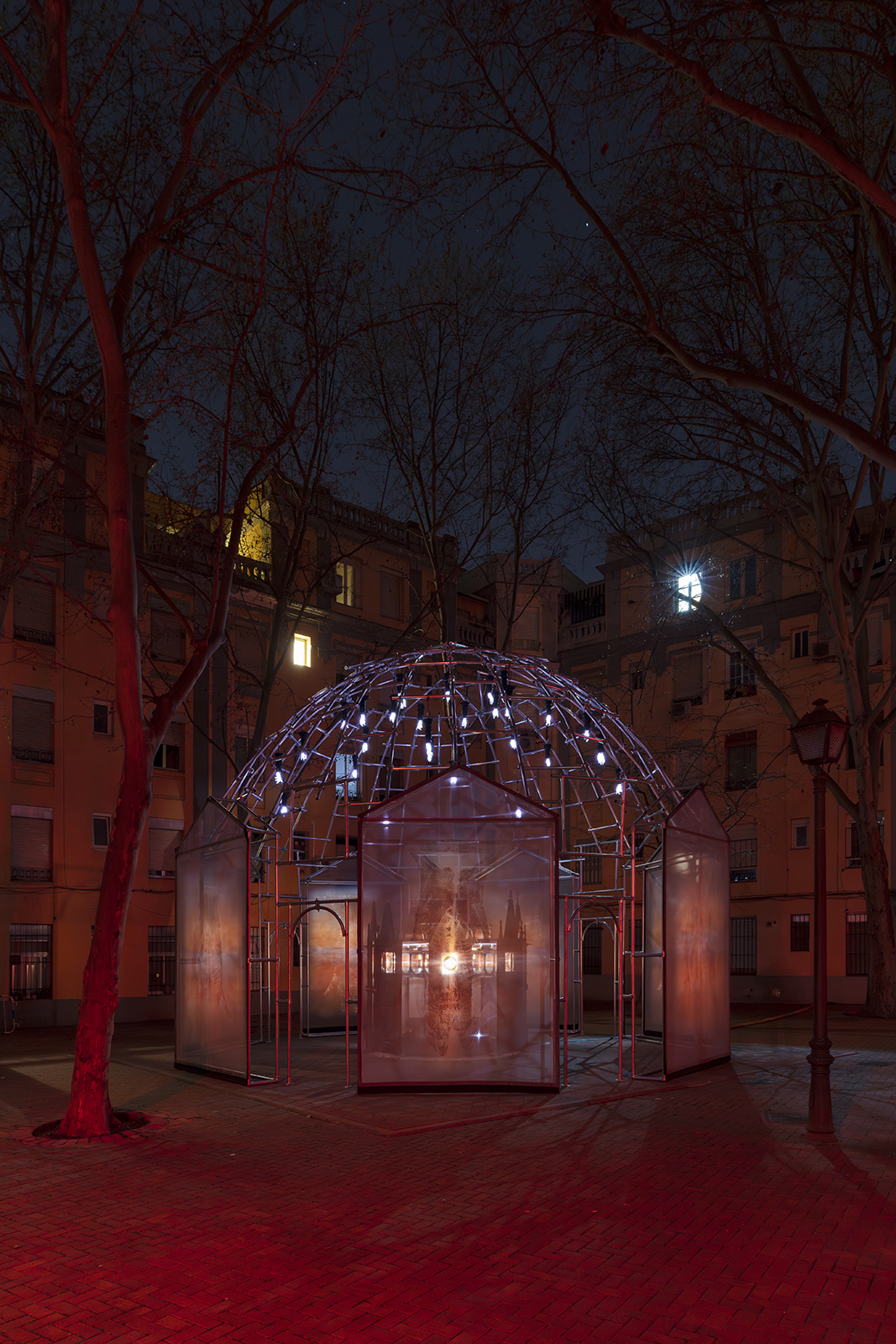
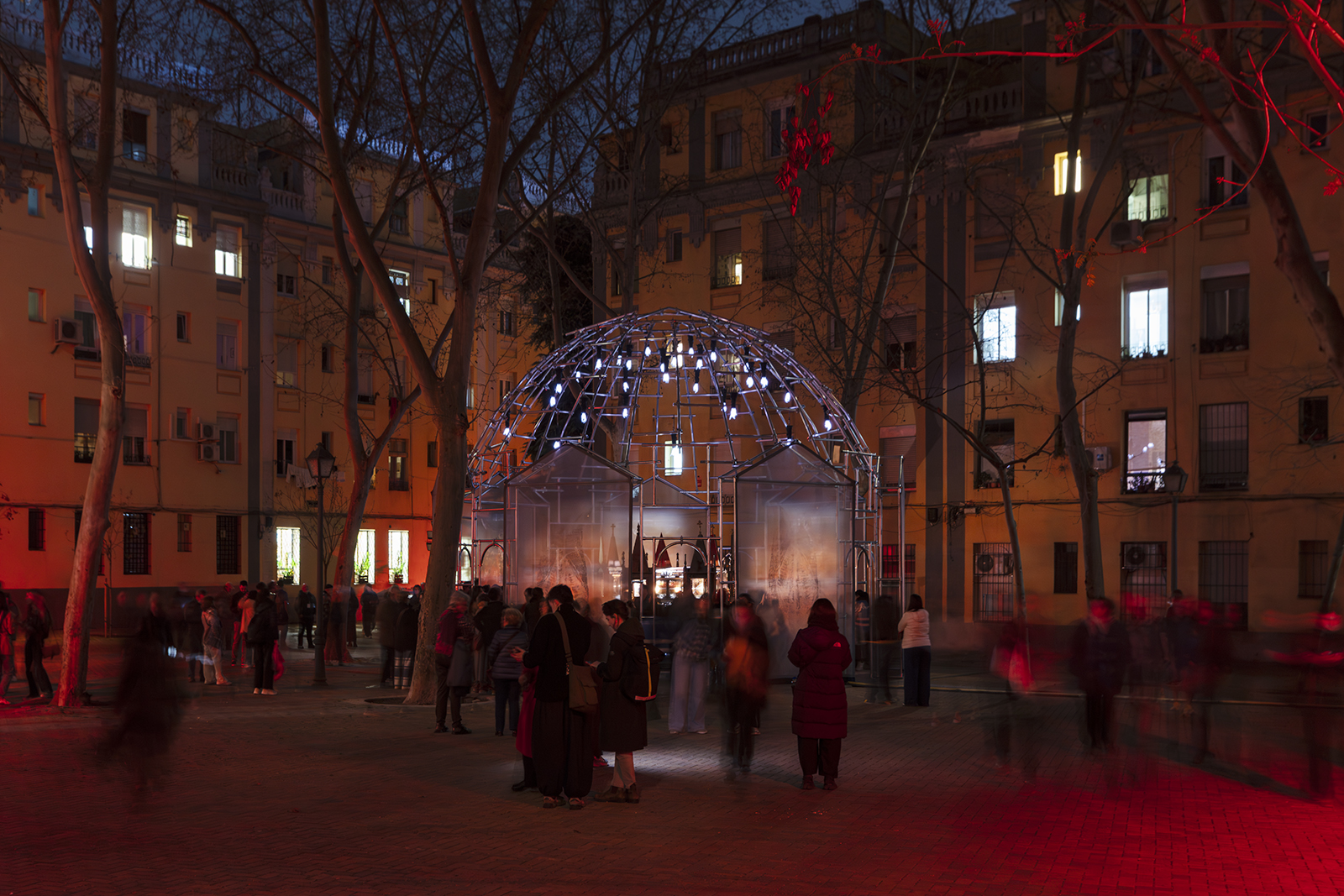
Redentora” is an audiovisual installation articulated around a zoetrope integrated into a metallic structure shaped like a temple, with seven accesses and a dome. It was realized for the Festival LuzMadrid during the days 12, 13 and 14 of March 2026 in the Glorieta de San Víctor, Madrid.

The image is generated through an analog projection system based on the rotary movement of the zoetrope. Taking advantage of the rotation, El Niño de Elche has designed a sound space using whips, cowbells and other elements that when striking or being struck generate the characteristic sound surrounding the piece.

Twenty-one painted glasses, arranged on the perimeter of a drum, spin synchronized with the flickering of seven spotlights. This mechanism projects onto seven holographic gauzes an animation visible from both the interior and the exterior of the installation.

The frames have been made on glass support, using acrylic paint, bitumen of Judea and bulb lacquer.

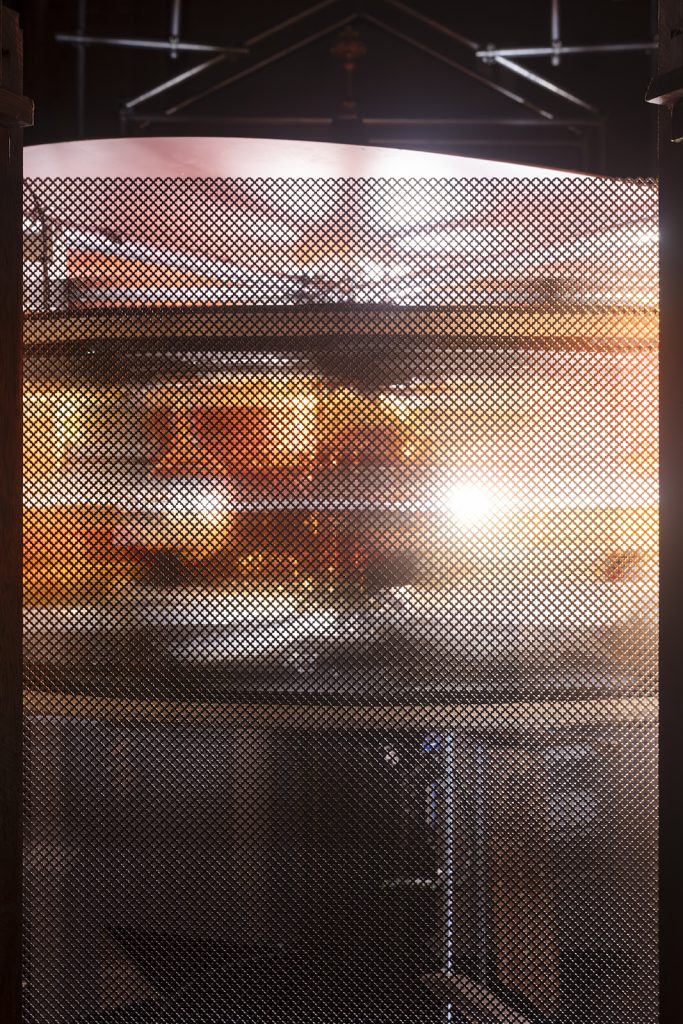
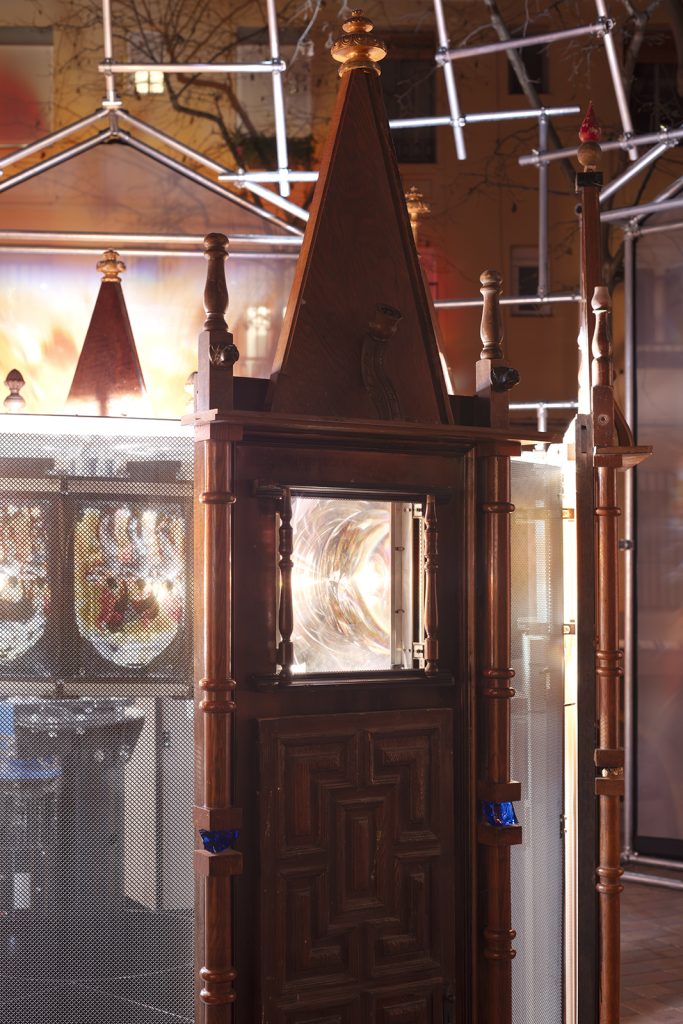
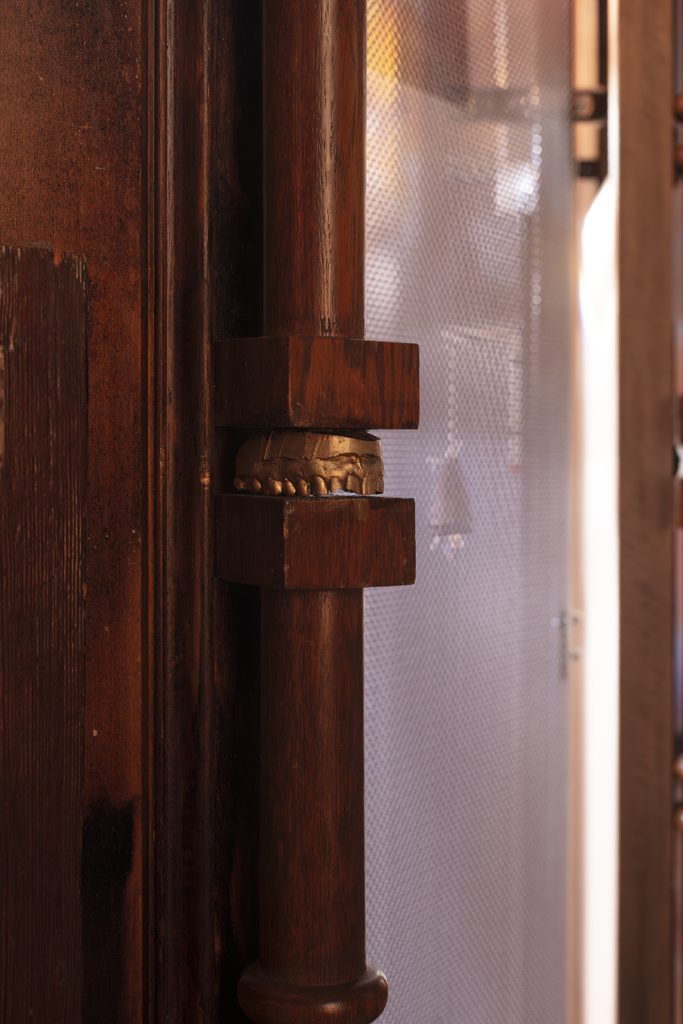
Surrounding the machine, seven “contemporary” confessionals configure the exterior perimeter. They are assemblages of wooden pieces that evoke structures of ecclesiastical origin. These pieces are connected to each other through micro-perforated metallic sheets, closing the set.

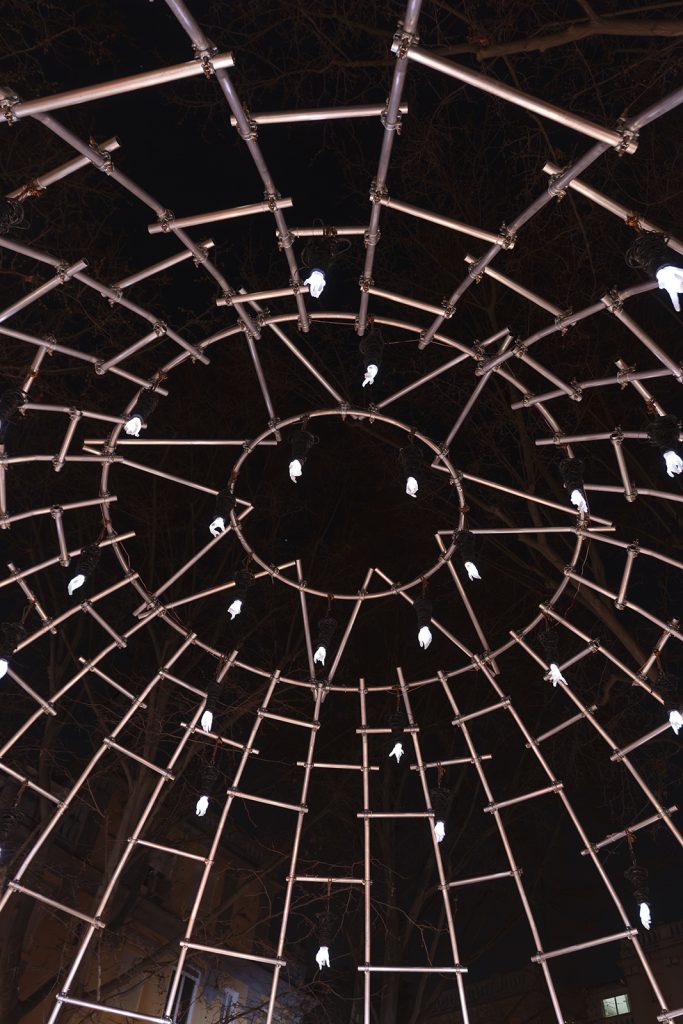
The metallic dome that completes the installation is composed of two bodies. The lower one is built with galvanized steel bars joined by scaffold connectors ; its seven doors, finished with triangular tympanums, allow for the tensioning of the holographic gauzes onto which the animation is projected.

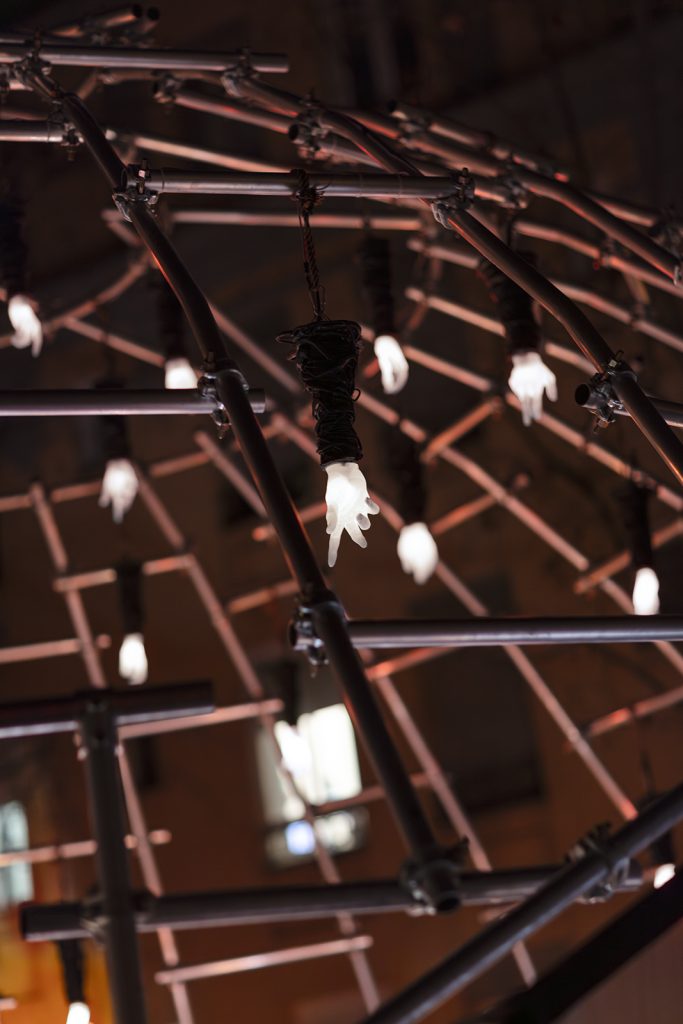
Over this body rises a dome formed by aluminum bars joined with scaffold clamps. Its geometry refers to the structures prior to the development of Renaissance domes. Inside this dome, an LED lighting installation and suspended sculptural elements are also integrated: hands with arm extensions made from different types of recycled plastic.

The set is culminated with a lantern in the shape of a seven-pointed star.

The text of “Redentora” has been written by Ángela Segovia.

All these words… redeem, redeemer, kill, kill, slaughterhouse, slaughterhouse, slaughterhouse, blood, blood, blood, flesh, executioner, charity, mercy, fire, justice, art, leper, beggar, purify, purify, sacrifice, sacrifice, sacrifice, sacred, sacred, violence… 

All these words spinning in a zoetrope, a toy, all these words spinning, swapping, swapping a little more, a little more, until they touch each other, until they transform, repeating incessantly. REDENTORA is all those words, everything that is in them, what there could be.

All those images repeating, spinning, transforming, touching each other. The body of a flayed pig, hanging from a hook, the body of a Christ descending from the cross, faithful hoisting a golden calf, sinning against God, or else, workers hoisting their victim, the animal they must kill to feed the people.

All those symbols repeating and mutating, repeating and transforming, until they turn over on themselves, until they become the opposite of what they started out being. It is said that even prehistoric art was a way of communicating with the divine. I do not know, for sure, in ancient traditions such as the Egyptian ones, cults were surrounded by a magnificent artistic production. Certainly, Christianity, from the beginning, also adopted an artistic production linked to cults. Spiritual communication and teaching of dogma were merging and artists put their creation at the service of a common good.

In the Christian world, blood gradually ceased to be blood and wine was used as a symbol. Flesh ceased to be flesh, and bread was used as a symbol. And finally, the long history of animal sacrifices to God was concluded with the ultimate sacrifice of Christ. Anthropologically, does this not point to a civilizing process?. According to René Girard, an anthropological reading of sacrifice can be made as a rite in which an outlet is given to the violence of a social group to prevent that violence from turning back on the group itself. One victim is substituted for another, a dispensable one. But this initial function of the sacrifice is not transmitted as such, but is obscured by the symbol that replaces it, so that in this way it can be fulfilled through magical belief. This holocaust will protect us. The sacrifice will cleanse us of sin, redeem us, free us from the slavery of violence. What is sacrificed becomes sacred. Nevertheless, it does not cease to be a substitution, since violence can only change direction but not disappear.

Yes, the appearance of Christ will change that perspective, the sacrifice of the son of God will profoundly transform the symbolic swap. By inverting the sacrifice, it ceases to be necessary to use one violence to quench another. Since it is God who sacrifices something, people are disarmed, and what is offered to them in exchange for attending that sacrifice is something completely different: love, charity, mercy. Turning the other cheek. Deactivating violence through submission to it, out of love. That is the message of Christianity, and it is then when sacrifice ceases to be a group rite and is transformed into a personal experience.

But what does this have to do with art. What does this have to do with a slaughterhouse built in Madrid in the year 25 of the last century.

It is easy to see it when the words, the images, the symbols, begin to spin, they repeat, they repeat, they transform, everything becoming intermingled. It is easy to notice it.

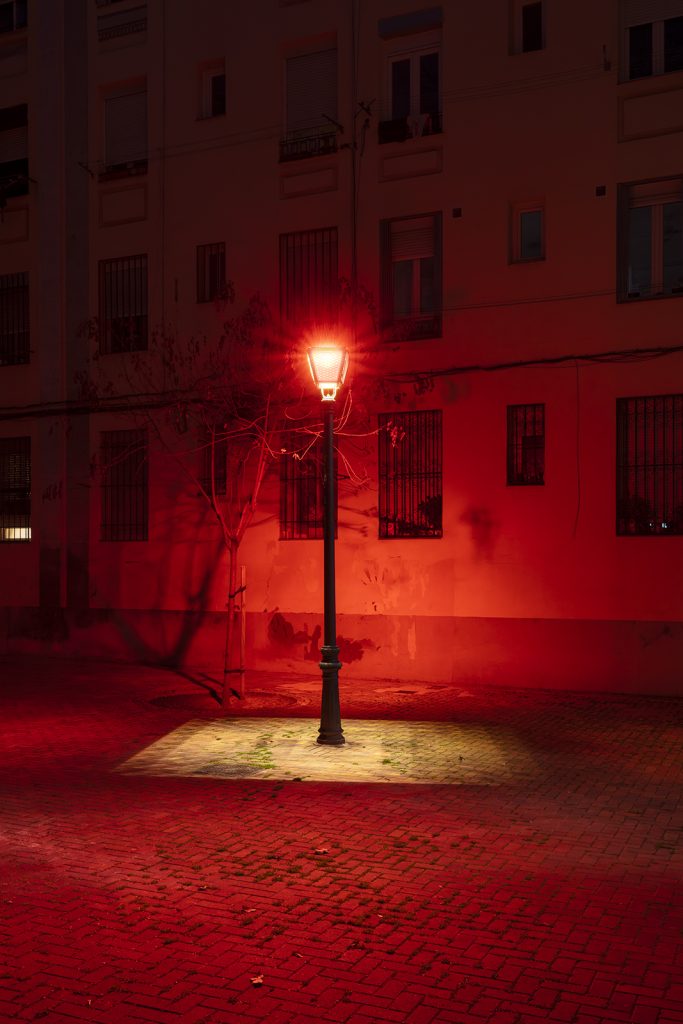
Who sacrificed themselves in that slaughterhouse?. Who was sacrificed?. Did the blood purify the tuberculosis patients who came to drink it?. Or did it contaminate the river waters?. And what is sacrificed now, who is sacrificed now in the mechanized processes of industrial slaughterhouses?. Where is the blood we no longer see?. Where is the death we no longer see?. Where are the muted symbols?. What happens when the civilizing process erases every trace of the death with which we supply not the food but the gastronomic leisure of the city of Madrid?. And art, which centuries ago ceased to be dependent on religions and feudal powers?. Does art today seek any relationship with the spiritual?. Could not this non-religious art deal with that nameless violence that is increasingly hidden, more concealed, more apparently whitened by the civilizing processes of our world?. Or what will we do with that violence that has been omitted?. What will redeem us from it?. What will remind us of its existence?.

Perhaps REDENTORA is about this, about all these questions, all those words, those images, those symbols, that do not stop spinning, repeating, intertwining with you.

Ángela Segovia

REDENTORA.
Produced in collaboration with the Festival LuzMadrid and Museo Villa Stuck (Munich).

Sound space: El Niño de Elche.
Texts: Ángela Segovia.
Digital production: Pietro Melchionda.

Photographs: Sergio Pradana.
Video: Matteo Berardone | Voice: Ángela Segovia | Music: Gael Lefeuvre.
Promotional video LuzMadrid: Raimundo Pérez-Messina.
Communication: Cultproject.
Brochure design: Oriana Distefano.

Design and manufacture of Redentora machine: area-lab.
Led installation: Insight luz y control.
Electronic and electricity assistant: Giacomo Ciucci Gómez.
Construction of metallic structure: Estudio Borondo.
Collaborating engineering: Think Engineering.

Assembly technicians: Daniel Aguado Rico and Iván Martín.
Carpentry: Álvaro Gómez Candela.

Artistic assistant: Claudia Rodríguez Coto.
Technical direction: Eduardo Vicente González.

Project director: Gina Aguiar.

Acknowledgements: 56fili. Julián Segovia. Fernando Gutiérrez. Alfonso Fulgencio. Fernando Herranz. Sostenplas. Reciclearte. Pro Art Moving. Peroni. Serviescenic. Visornets. Cristalerías Mavi. Rojo soluciones mecánicas. Hijo de Ciriaco Sánchez. Alu-Stock. Curval. Vinilarium. Gruas Sixto.